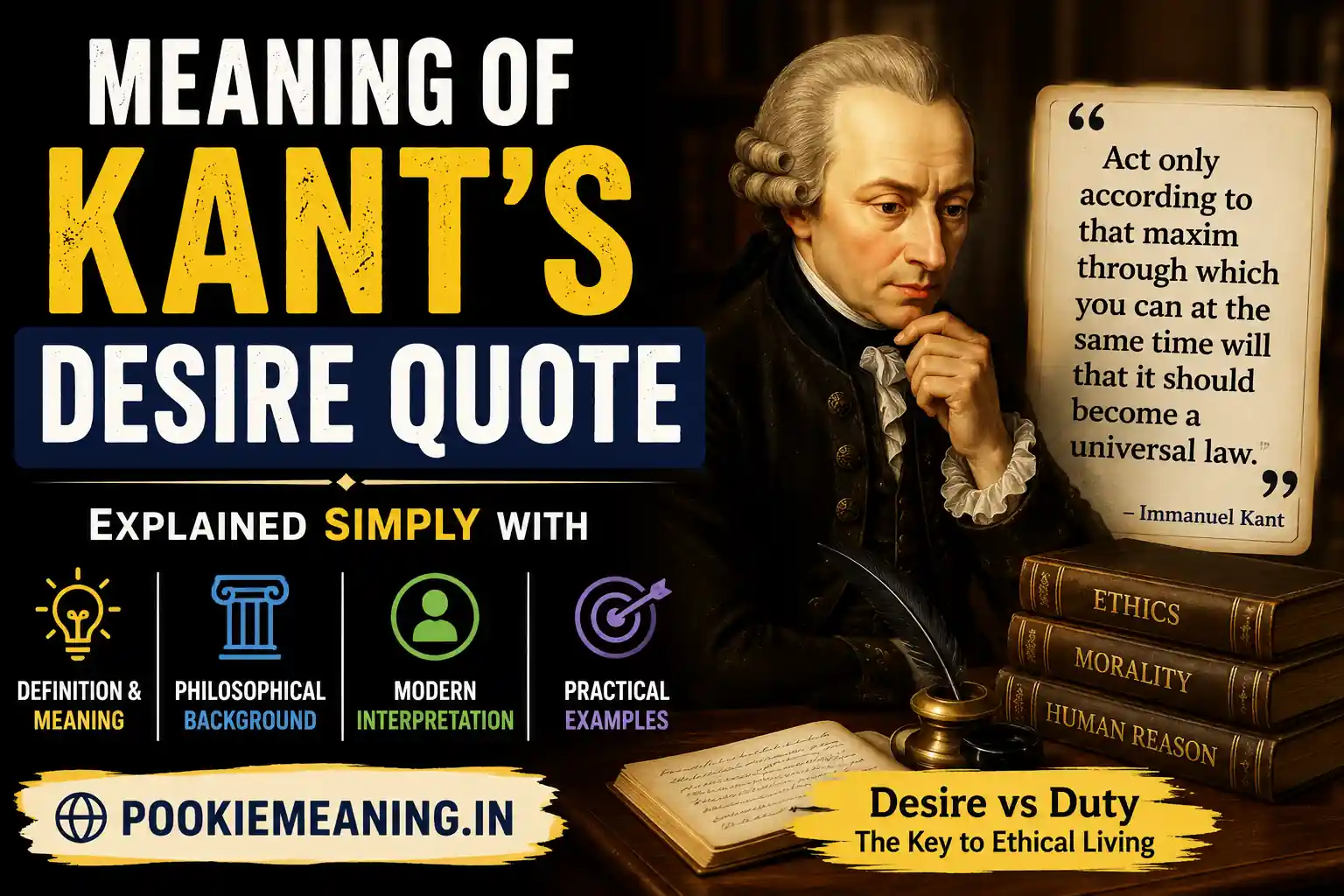
Many people come across Kant’s Desire Quote while reading philosophy, self-improvement books, or motivational content online. At first glance, the quote may seem complicated, but its core message is surprisingly practical and relevant to everyday life.
The Meaning of Kant’s Desire Quote is generally connected to the idea that human desires should not completely control our decisions. According to philosopher Immanuel Kant, a person should act based on reason, duty, and moral principles rather than being driven only by personal wants and emotions.
Read also: Mojo Meaning
Who Was Immanuel Kant?
Immanuel Kant was an 18th-century German philosopher who is considered one of the most influential thinkers in modern philosophy.
His work focused on:
- Ethics
- Morality
- Human reason
- Freedom
- Responsibility
Kant believed that people should make decisions based on what is morally right rather than what simply feels good at the moment.
What Does Kant’s Desire Quote Mean?
The Meaning of Kant’s Desire Quote can be understood as a reminder that desires are natural, but they should not become the sole guide for our actions.
In simple words:
- Desire tells us what we want.
- Reason helps us decide what is right.
- Morality helps us understand the impact of our actions.
Kant argued that a truly ethical person acts because it is the right thing to do, not merely because it satisfies a desire.
A Real-Life Example
Imagine a student who wants to cheat on an exam because they desire a higher score.
Their desire says:
“I want good marks.”
But reason and morality say:
“Cheating is wrong.”
According to Kant’s philosophy, the student should follow the moral principle rather than the desire.
This example helps explain the deeper Meaning of Kant’s Desire Quote.
Read also: Loyalty Meaning
Why Is This Quote Still Relevant Today?
Even in modern society, people constantly face situations where desire conflicts with responsibility.
Examples include:
- Spending money impulsively
- Breaking promises for personal gain
- Taking shortcuts at work
- Ignoring responsibilities for temporary pleasure
Kant’s message encourages people to think beyond immediate satisfaction and consider long-term values.
Desire vs Duty in Kant’s Philosophy
One of Kant’s most famous ideas is the difference between desire and duty.
Desire
Desire is based on:
- Emotions
- Personal wants
- Pleasure
- Temporary satisfaction
Duty
Duty is based on:
- Moral responsibility
- Ethical behavior
- Principles
- Respect for others
Kant believed that actions performed from duty have greater moral value than actions performed only because of desire.
Read also: Recusal Meaning
Modern Interpretation of Kant’s Desire Quote
Today, many people interpret Kant’s ideas in a practical way.
The quote can be understood as:
“Don’t let temporary desires control important life decisions.”
This does not mean desires are bad. Instead, it means desires should be balanced with wisdom, responsibility, and ethics.
For example:
- Save money before making a luxury purchase.
- Think before reacting in anger.
- Consider consequences before acting impulsively.
These are modern applications of Kant’s philosophy.
Common Misunderstandings
Many people mistakenly believe Kant wanted people to ignore all desires.
That is not true.
Kant understood that desires are part of human nature. His argument was that desires should not override moral judgment.
A balanced life involves:
- Having goals
- Pursuing happiness
- Respecting ethical principles
- Making rational decisions
Why People Search for Kant’s Desire Quote
People often search for the Meaning of Kant’s Desire Quote because:
- They encounter it in philosophy classes.
- They see it on social media.
- They read it in motivational books.
- They want a deeper understanding of human behavior.
The quote continues to inspire discussions about self-control, ethics, and personal growth.
Read also: Based Meaning
Conclusion
The Meaning of Kant’s Desire Quote revolves around the idea that while desires are natural, they should not become the ultimate guide for our actions. Immanuel Kant believed that reason, morality, and duty should play a central role in decision-making. His philosophy remains relevant today because it encourages people to think carefully, act responsibly, and make choices that align with ethical values rather than temporary impulses.
FAQs
1. What is Kant’s Desire Quote about?
It generally emphasizes controlling desires through reason and moral principles.
2. Who created the Desire Quote?
The idea comes from the philosophical teachings of Immanuel Kant.
3. Does Kant believe desires are bad?
No, he believed desires are natural but should not override morality.
4. Why is Kant’s philosophy important today?
It helps people make ethical and responsible decisions in daily life.
5. What is the main lesson of Kant’s Desire Quote?
Use reason and moral judgment instead of blindly following personal desires.
📖 Read Also
1️⃣ Sigma Meaning English
2️⃣ POV Meaning on Instagram
3️⃣ Delulu Meaning
4️⃣ Green Flag Meaning
5️⃣ Soulmate Meaning