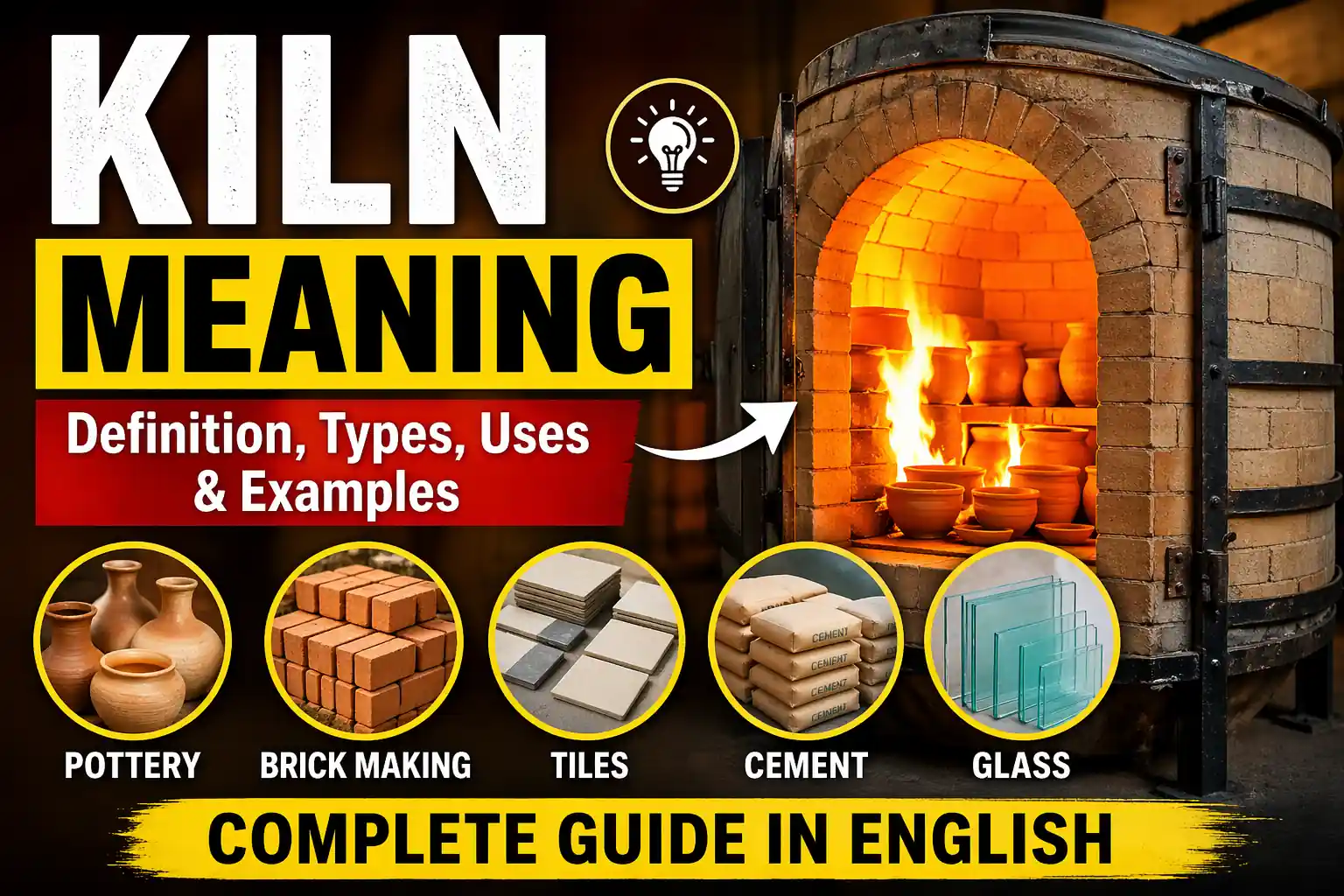
The term kiln meaning is often searched by people curious about pottery, construction, or manufacturing. In simple words, a kiln is a special type of oven used for heating materials at very high temperatures. It is mainly used to harden, dry, or change the physical and chemical properties of items like clay, bricks, ceramics, and even cement.
In everyday life, we may not notice it, but kilns play a huge role in building houses, making pottery, and even producing tiles.
What is Kiln Meaning?
The kiln meaning refers to a furnace or oven designed to heat materials to extremely high temperatures in a controlled environment. Unlike a regular oven, a kiln can reach temperatures above 1000°C.
For example, when raw clay is shaped into a pot, it is soft and fragile. After heating in a kiln, it becomes strong and durable. This process is called firing.
Types of Kilns
Understanding kiln meaning becomes easier when you know the different types of kilns used today.
1. Electric Kiln
Electric kilns are widely used in homes and studios. They are easy to operate and provide precise temperature control.
2. Gas Kiln
Gas kilns use natural gas or propane. They are popular in professional pottery and industrial applications.
3. Wood-Fired Kiln
This traditional kiln uses wood as fuel. It gives unique textures and finishes to pottery.
4. Tunnel Kiln
Tunnel kilns are used in large industries for continuous production of bricks and tiles.
Uses of a Kiln
The practical use of kiln meaning becomes clear when we look at where kilns are applied:
- Pottery & Ceramics: Used to harden clay items
- Brick Manufacturing: Essential for making strong building bricks
- Tile Production: Used in flooring and wall tiles
- Cement Industry: Helps in producing cement
- Glass Making: Used for shaping and strengthening glass
Without kilns, modern construction and art industries would struggle to exist.
Real-Life Example
Imagine a village potter making clay pots. After shaping the pots, they dry them under sunlight. But these pots are still weak. When placed inside a kiln and heated, they become strong enough to hold water and last for years.
Similarly, every brick used in your home has passed through a kiln to gain strength.
Why Kilns are Important
The importance of understanding kiln meaning lies in its impact on daily life. Kilns help in:
- Improving strength and durability of materials
- Making products heat-resistant
- Enhancing the quality and finish of items
- Supporting large-scale industrial production
Kiln vs Oven – What’s the Difference?
Many people confuse kilns with ovens. Here’s a simple difference:
- Oven: Used for cooking food at lower temperatures
- Kiln: Used for industrial or artistic purposes at very high temperatures
My Opinion (Practical Insight)
From a practical point of view, kilns are one of the most underrated inventions. We see buildings, tiles, and pottery everywhere, but rarely think about how they are made. Without kilns, even simple clay items wouldn’t last long.
Conclusion
To summarize, the kiln meaning is much more than just an oven. It is a powerful tool used in industries and art to transform raw materials into durable and useful products. From pottery to construction, kilns play a vital role in shaping our modern world.
FAQs
1. What is kiln meaning in simple words?
Kiln meaning refers to a high-temperature oven used to harden materials like clay, bricks, and ceramics.
2. What is a kiln used for?
A kiln is used for pottery, brick making, tile production, cement manufacturing, and glass processing.
3. How hot does a kiln get?
A kiln can reach temperatures above 1000°C depending on its type and use.
4. What is the difference between kiln and oven?
A kiln is used for industrial heating at high temperatures, while an oven is used for cooking food.
5. Who uses kilns?
Artists, potters, builders, and industrial manufacturers commonly use kilns.