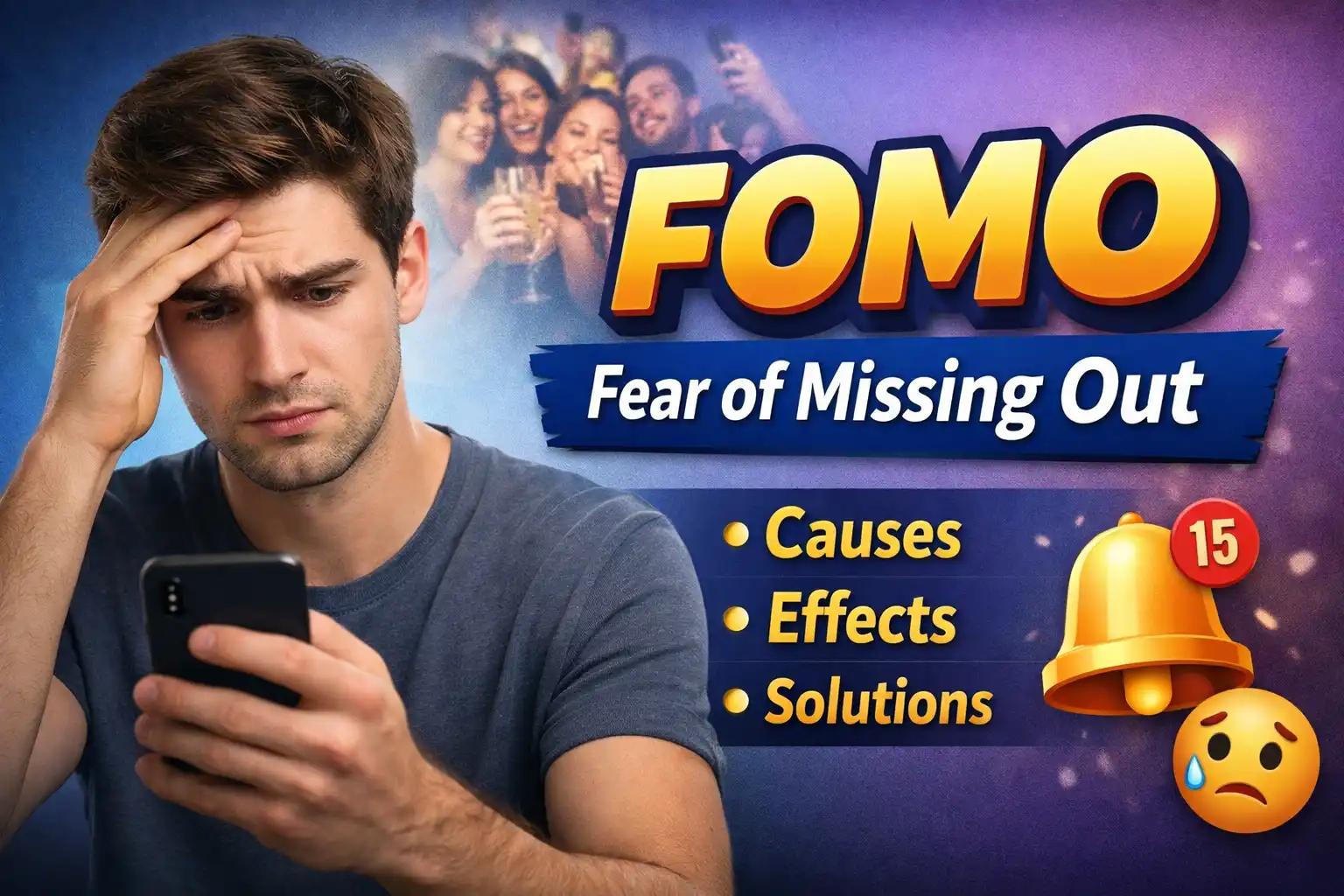
In today’s fast-paced digital world, you may have come across the term FOMO quite often. But what exactly does it mean?
FOMO stands for Fear of Missing Out. It refers to the feeling of anxiety or uneasiness that arises when you think others are having rewarding experiences without you. This feeling is especially common in the age of social media, where people constantly share highlights of their lives.
What is FOMO?
FOMO is a psychological phenomenon where a person feels worried that they are missing out on fun, exciting, or important events. It often leads to the urge to stay constantly connected with what others are doing.
For example:
- Seeing your friends posting vacation pictures online
- Watching others attend parties or events
- Missing a trending topic or viral content
These situations can trigger FOMO and make you feel left out.
Causes of FOMO
There are several reasons why people experience FOMO:
1. Social Media Influence
Platforms like Instagram, Snapchat, and Facebook showcase curated versions of people’s lives. This can create unrealistic comparisons.
2. Need for Belonging
Humans naturally want to feel included and accepted. Missing out on activities can threaten that feeling.
3. Low Self-Esteem
People with lower confidence levels may compare themselves more with others and feel inadequate.
4. Fear of Regret
The thought that “I might miss something important” can create anxiety and pressure to participate in everything.
Effects of FOMO
FOMO can have both mental and emotional effects, such as:
- Increased stress and anxiety
- Reduced focus and productivity
- Difficulty enjoying the present moment
- Poor sleep due to constant phone usage
- Lower life satisfaction
Over time, excessive FOMO can negatively impact mental well-being.
Examples of FOMO in Daily Life
Here are some common situations where FOMO appears:
- Checking your phone repeatedly for updates
- Feeling upset after seeing others hang out without you
- Saying “yes” to events even when you don’t want to go
- Constantly refreshing social media feeds
How to Overcome FOMO
The good news is that FOMO can be managed with simple strategies:
1. Limit Social Media Usage
Reduce screen time and avoid excessive scrolling.
2. Practice Mindfulness
Focus on the present moment and appreciate what you have.
3. Set Priorities
Understand what truly matters to you instead of following others.
4. Be Grateful
Practicing gratitude can shift your focus from what you lack to what you have.
5. Accept That You Can’t Do Everything
It’s okay to miss out sometimes—no one can attend every event.
FOMO vs JOMO
Interestingly, the opposite of FOMO is JOMO (Joy of Missing Out). JOMO is about enjoying your own time without worrying about others. It encourages peace, self-awareness, and contentment.
Conclusion
FOMO, or Fear of Missing Out, is a common feeling in today’s connected world. While it can motivate you to stay engaged, too much of it can harm your mental health. By understanding its causes and practicing simple habits like mindfulness and limiting social media, you can take control of FOMO and live a more balanced, happy life.