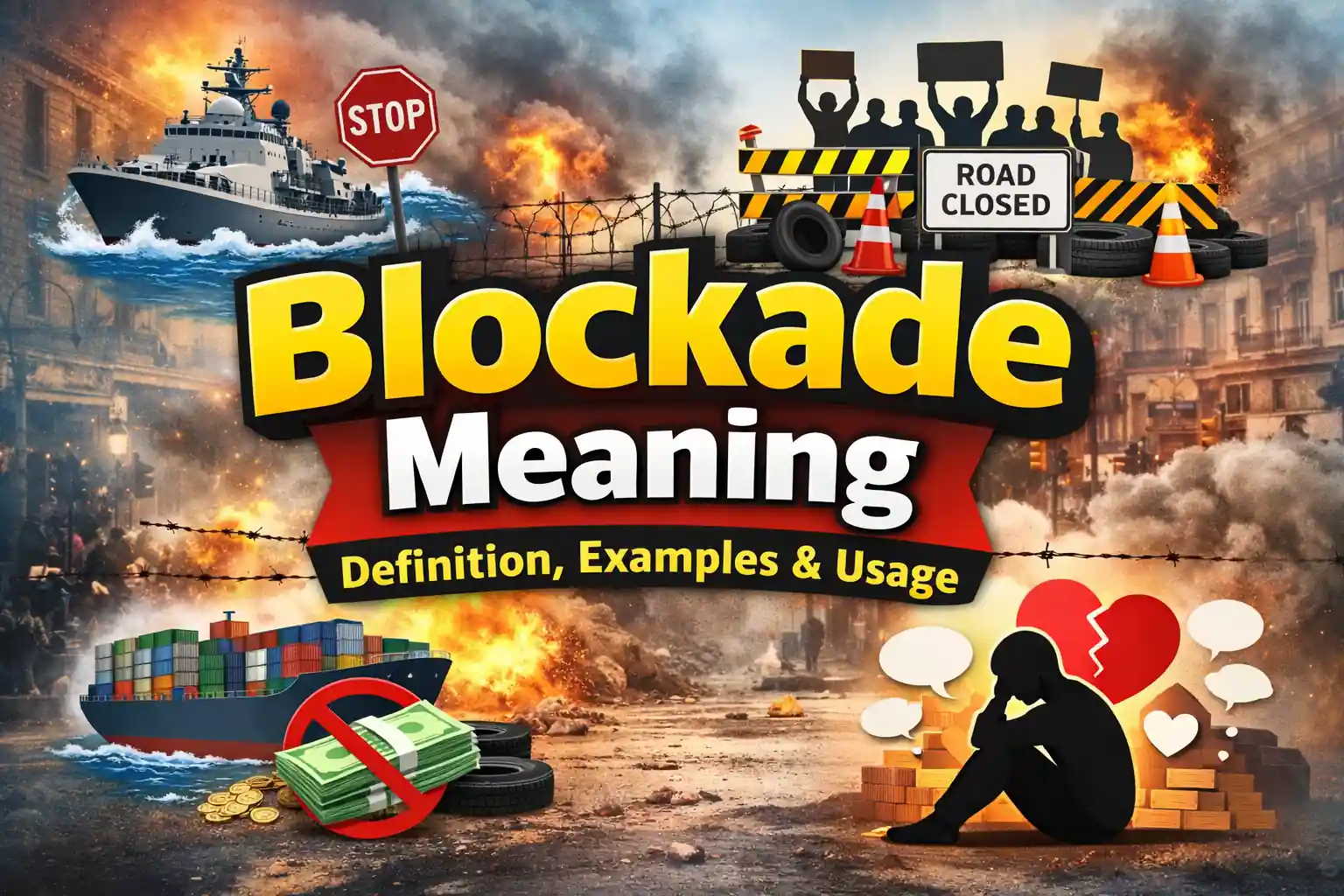
Blockade meaning refers to a situation where something is blocked or prevented from moving, entering, or leaving a place. It is commonly used in both physical and metaphorical contexts. In simple words, a blockade is an obstruction or barrier that stops progress or movement.
The term is widely used in politics, military, protests, and even daily life situations. Understanding the blockade meaning helps you use the word correctly in conversations, writing, and exams.
What is Blockade Meaning?
The blockade meaning is:
👉 An act of sealing off a place to prevent goods, people, or information from entering or leaving.
It can be:
- Physical (like roads blocked by protestors)
- Military (like stopping supplies during war)
- Emotional or mental (like communication breakdown)
Types of Blockade
1. Military Blockade
A military blockade happens during war when one country blocks another country’s access to resources.
Example:
A navy blocking ships from reaching a port.
2. Economic Blockade
This type of blockade restricts trade and economic activities.
Example:
Countries stopping imports or exports to weaken another nation.
3. Road Blockade
This is common in protests where people block roads to demand attention.
Example:
Farmers blocking highways during protests.
4. Emotional Blockade
Sometimes, blockade meaning is used in a non-physical sense.
Example:
A person unable to express feelings due to emotional stress.
Blockade Meaning in Sentences
Here are some simple examples to understand better:
- The protestors created a blockade on the main road.
- The country faced a naval blockade during the war.
- There was a communication blockade between the two teams.
- Heavy snow caused a blockade on the highway.
Synonyms of Blockade
Understanding synonyms helps improve vocabulary:
- Barrier
- Obstruction
- Block
- Barricade
- Closure
Antonyms of Blockade
Opposite words of blockade meaning include:
- Opening
- Access
- Passage
- Clearance
Real-Life Example of Blockade
In India, road blockades are often seen during protests. For example, when farmers protest, they sometimes block highways to demand government attention. This is a practical example of blockade meaning in daily life.
Similarly, during international conflicts, countries may use economic or military blockades to put pressure on others.
Why is Blockade Important?
Understanding blockade meaning is important because:
- It helps in news understanding
- Useful in competitive exams
- Improves English vocabulary
- Helps in real-life communication
Common Mistakes to Avoid
- ❌ Confusing blockade with “block” (block is general, blockade is more serious)
- ❌ Using blockade only for war (it can be used in daily life too)
- ❌ Ignoring metaphorical use (emotional blockade is also common)
Conclusion
The blockade meaning is simple yet powerful. It refers to stopping or restricting movement, whether physically, economically, or emotionally. From road protests to international conflicts, the word is widely used in different contexts.
By learning its meaning, types, and examples, you can use the word blockade confidently in both spoken and written English.
FAQs
1. What is the simple meaning of blockade?
Blockade means stopping movement or access by creating a barrier.
2. Is blockade used only in war?
No, blockade can be used in daily life, like road blockages or emotional barriers.
3. What is an example of blockade?
Protestors blocking a road is a common example of a blockade.
4. What is the difference between block and blockade?
Block is general, while blockade is more serious and often planned.
5. Can blockade be used metaphorically?
Yes, it can describe emotional or communication barriers.