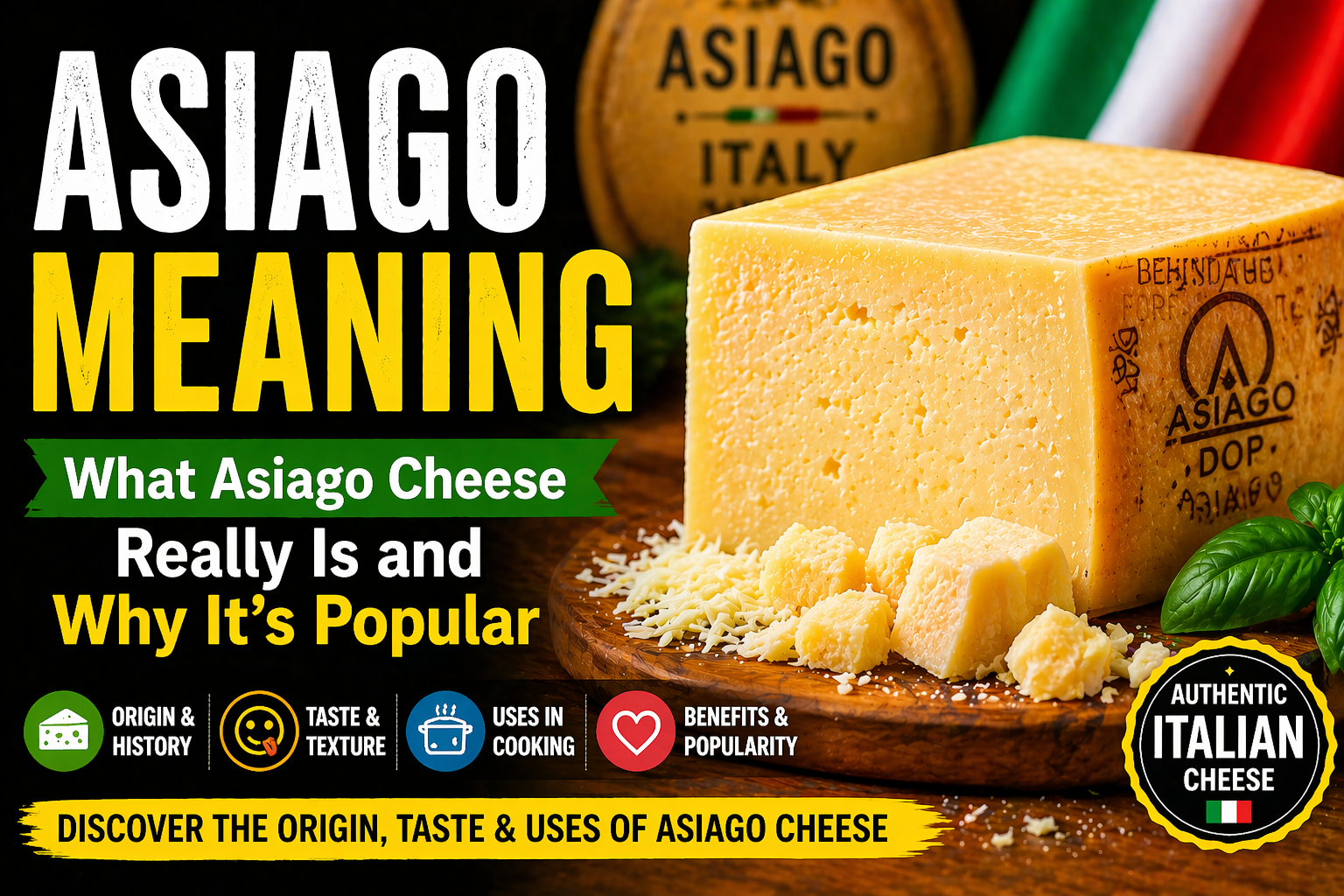
The Asiago meaning is closely connected to food, culture, and tradition. If you’ve ever tasted Asiago cheese, you know it has a rich, slightly nutty flavor that makes it stand out. But Asiago is not just a type of cheese — it represents a long history rooted in Italian craftsmanship.
The name “Asiago” comes from the small town of Asiago, located in the Veneto region of northern Italy. This is where the cheese was originally produced, and it still remains one of the most famous Italian cheeses today.

What is Asiago?
Asiago is a type of cheese made from cow’s milk. It comes in two main varieties:
1. Fresh Asiago (Asiago Pressato)
- Soft and smooth texture
- Mild and slightly sweet taste
- Usually aged for a few weeks
2. Aged Asiago (Asiago d’Allevo)
- Hard and crumbly texture
- Strong, sharp flavor
- Aged for months or even years
Both types give us a deeper understanding of the Asiago meaning, showing how time and aging can transform flavor.

Asiago Meaning in Food Culture
The Asiago meaning goes beyond just being a cheese. It reflects:
1. Tradition
Asiago has been made for over 1,000 years. Originally, it was made from sheep’s milk, but today cow’s milk is more common.
2. Craftsmanship
Italian cheesemakers follow strict methods to maintain quality. Authentic Asiago cheese often carries the DOP (Denominazione di Origine Protetta) label, ensuring it comes from specific regions.
3. Culinary Versatility
Asiago is used in many dishes such as:
- Pasta
- Pizza
- Sandwiches
- Salads
Its flavor enhances both simple and gourmet recipes.
Taste and Texture of Asiago
Understanding the Asiago meaning also involves knowing its taste:
- Fresh Asiago → Creamy and mild
- Aged Asiago → Bold, nutty, and slightly salty
This variation makes it suitable for different cooking styles. For example, fresh Asiago melts easily, while aged Asiago is perfect for grating.
Why Asiago is So Popular
1. Unique Flavor Profile
Asiago offers a balance between mild and strong flavors, depending on its age.
2. Healthy Option
It contains protein, calcium, and essential nutrients.
3. Global Appeal
From Italian kitchens to international fast-food chains, Asiago is widely used across the world.
Asiago vs Other Cheeses
People often compare Asiago with other cheeses like Parmesan or Cheddar. While Parmesan is harder and saltier, Asiago provides a more balanced and slightly sweet taste, especially when fresh.
Real-Life Example
If you’ve ever ordered a sandwich with Asiago cheese, you might have noticed a richer flavor compared to regular cheese slices. That’s the real-life experience of the Asiago meaning — quality and taste combined.
Final Thoughts on Asiago Meaning
The true Asiago meaning is a blend of history, flavor, and tradition. It’s not just cheese; it’s a symbol of Italian heritage and culinary excellence.
Whether you enjoy it melted on pizza or grated over pasta, Asiago always adds something special to your meal.

FAQs
1. What does Asiago mean?
Asiago refers to a type of Italian cheese named after a town in Italy.
2. Is Asiago cheese strong?
It depends on aging. Fresh Asiago is mild, while aged Asiago is strong and sharp.
3. Can Asiago be melted?
Yes, fresh Asiago melts very well and is great for cooking.
4. Is Asiago similar to Parmesan?
They are similar but Asiago is less salty and has a smoother flavor.
5. Where does Asiago cheese come from?
It originates from the town of Asiago in northern Italy.