If you’ve spent time on social media platforms like Instagram, TikTok, or Snapchat, you’ve probably seen phrases like “no cap” or “that’s cap.” These slang terms are extremely popular among Gen Z and are now commonly used in daily conversations. But what do they actually mean?
Let’s break it down in the simplest way possible.
What Does “Cap” Mean?
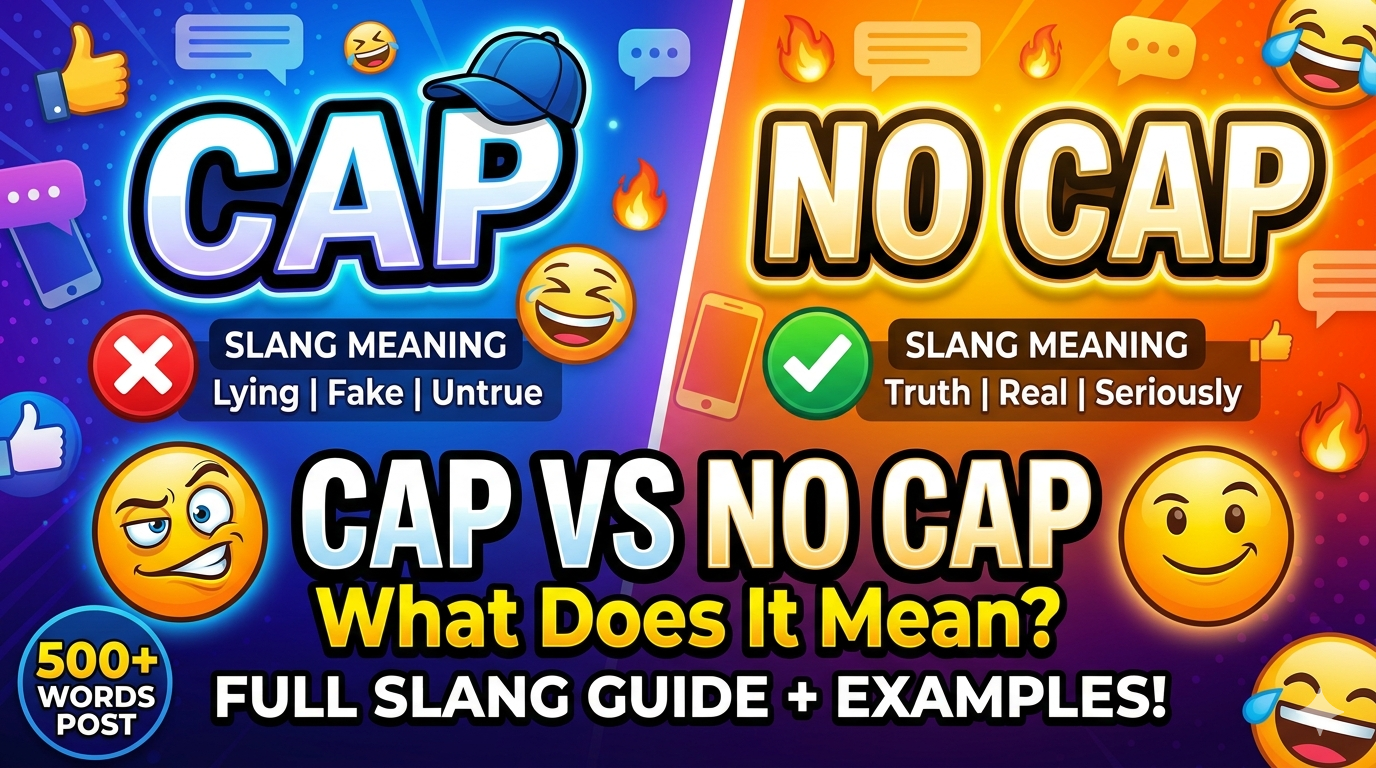
In slang, the word “cap” means a lie or something that is not true. When someone says “that’s cap,” they are basically saying, “that’s fake” or “you’re lying.”
Examples:
- “You got 100 marks without studying? That’s cap.”
- “He said he met a celebrity yesterday—total cap.”
So, anytime you doubt someone’s statement or think they’re exaggerating, you can call it “cap.”
What Does “No Cap” Mean?
The phrase “no cap” is the opposite of “cap.” It means truth, honesty, or no lie. When someone says “no cap,” they are emphasizing that they are being completely truthful.
Examples:
- “This is the best pizza I’ve ever had, no cap.”
- “I studied all night, no cap.”
It’s often used to make a statement sound more serious or believable.
Origin of Cap and No Cap
The slang “cap” and “no cap” originated from African American Vernacular English (AAVE) and later became popular through hip-hop culture and social media. Rappers and influencers started using these terms in songs and videos, which helped them spread quickly across the internet.
Today, they are part of everyday digital language, especially among teenagers and young adults.
How to Use Cap vs No Cap in Conversations
Using these terms correctly can make your conversations sound more modern and relatable. Here’s how you can use them:
Use “Cap” when:
- You think someone is lying
- Something sounds unrealistic
- You want to call out exaggeration
Use “No Cap” when:
- You want to prove honesty
- You’re emphasizing truth
- You’re being serious
Cap vs No Cap: Quick Comparison
| Term | Meaning | Usage Example |
|---|---|---|
| Cap | Lie / Fake | “That story is cap.” |
| No Cap | Truth / Real | “I’m telling the truth, no cap.” |
Why Is This Slang So Popular?
There are a few reasons why “cap” and “no cap” have become so popular:
- Short and catchy – Easy to use in chats
- Social media influence – Widely used on TikTok and Instagram
- Youth culture – Trending among Gen Z
- Expressive – Quickly shows belief or doubt
Final Thoughts
“Cap” and “no cap” are more than just slang words—they represent how language evolves with culture and technology. Understanding these terms helps you stay updated with modern communication trends and makes your conversations more engaging.
So next time someone tells you something unbelievable, you can confidently say, “That’s cap.” And when you’re being completely honest, just add “no cap” at the end.