Have you ever watched a cooking video where the chef says, “Let it simmer for a few minutes”? Or maybe you heard someone say that anger was “simmering” between two people. The word sounds simple, but many English learners still get confused about its exact meaning.
The Simmer Meaning is actually very interesting because this small word is used in both cooking and everyday conversations. In the kitchen, it describes a gentle style of cooking. In real life, it can describe emotions or situations that slowly continue in the background.
Once you understand how native English speakers use this word, you’ll start noticing it everywhere — recipes, movies, news articles, and even casual talks.
Simmer Meaning in Simple Words
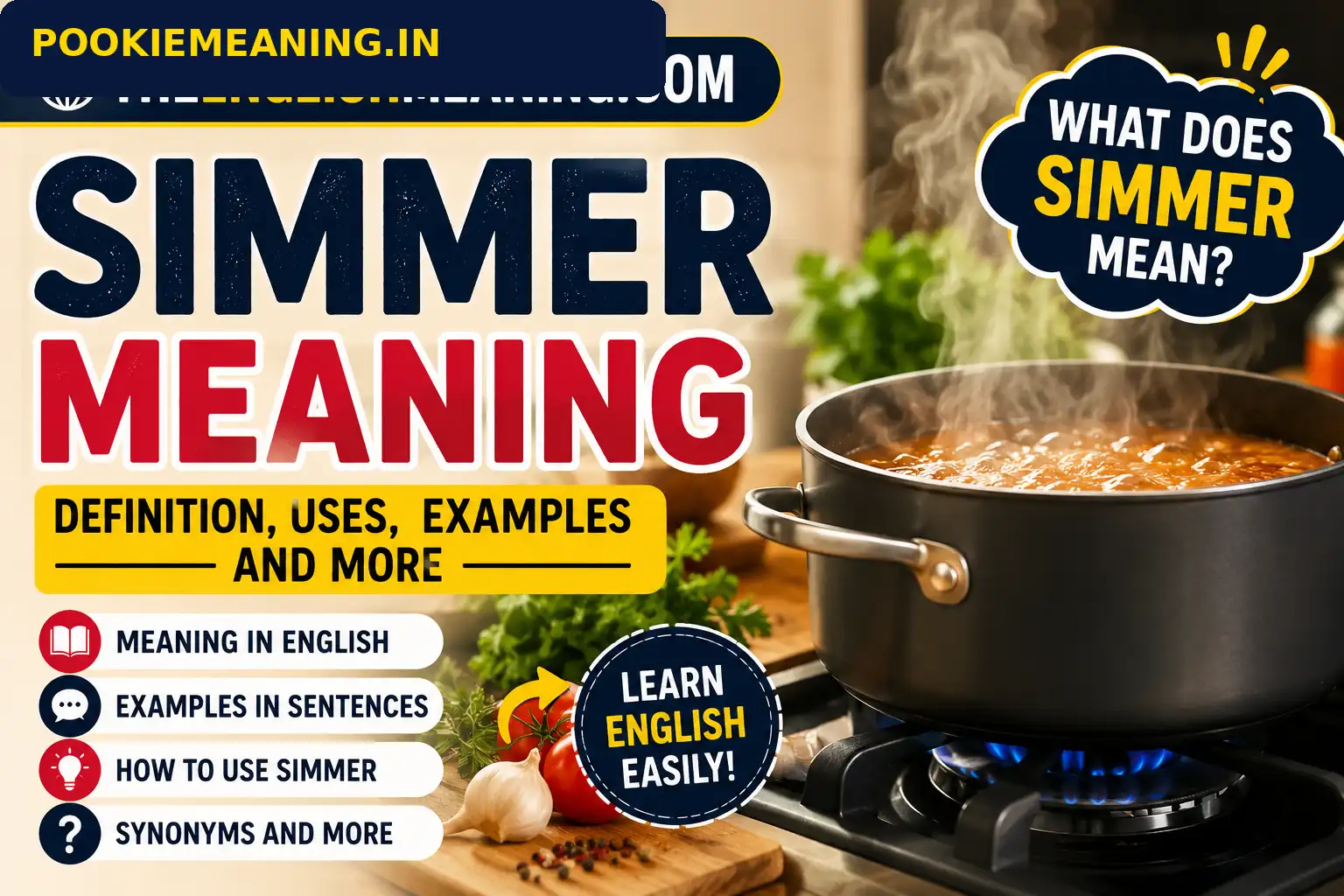
In simple English, simmer means to heat or cook something slowly without fully boiling it.
When water or food is simmering, you can see small bubbles forming gently. The heat is lower than boiling, so the cooking process stays soft and slow.
For example:
- “Let the soup simmer for 15 minutes.”
- “The curry is simmering on the stove.”
- “Simmer the tea for stronger flavor.”
This method is common in homes because slow cooking usually makes food taste richer and more delicious.
The Real Difference Between Simmer and Boil
A lot of people think simmering and boiling are the same thing, but they are slightly different.
When something boils, the heat is high and large bubbles appear rapidly. Simmering happens at a lower temperature with small bubbles appearing slowly.
Think of it like this:
- Boiling = fast and strong
- Simmering = calm and gentle
Indian dishes like dal, curry, and gravy are often simmered for a long time to bring out deep flavors. Even tea tastes different when it is allowed to simmer properly.
Simmer Meaning Beyond Cooking
Interestingly, the word isn’t only used in kitchens.
Native speakers also use simmer for emotions, tension, anger, or excitement that slowly grows over time.
For example:
- “Their argument continued to simmer for weeks.”
- “Excitement simmered before the cricket final.”
- “Stress was simmering inside him.”
In these examples, nothing explodes immediately. The feeling quietly stays alive in the background.
That’s why this word feels very natural and expressive in English.
Why Native Speakers Use This Word Often
One reason the Simmer Meaning is important is because it sounds more descriptive than basic words.
Instead of saying:
- “The soup cooked slowly.”
People naturally say:
- “The soup simmered for hours.”
It creates a clearer image in the listener’s mind.
The same thing happens with emotions.
Instead of saying:
- “He was slowly becoming angry.”
People may say:
- “Anger simmered inside him.”
This sounds smoother and more natural in English conversations.
Simmer Pronunciation
The pronunciation is very easy:
SIM-er
The first part “SIM” is spoken a little stronger.
If you hear English cooking shows or recipe videos, you’ll notice this word quite frequently.
Common Synonyms of Simmer
Depending on the situation, these words can have a similar meaning:
In Cooking
- Cook slowly
- Gentle boil
- Heat softly
- Stew lightly
For Emotions
- Grow slowly
- Build quietly
- Continue silently
- Develop gradually
Even though these words are similar, “simmer” sounds more natural in many English sentences.
Real-Life Examples of Simmer
Here are some natural examples people actually use:
Kitchen Examples
- “My grandmother lets the curry simmer for an hour.”
- “The sauce simmered slowly and smelled amazing.”
- “Don’t boil it too much — just let it simmer.”
Emotional Examples
- “Old tensions are still simmering between them.”
- “Excitement simmered across the stadium before the match.”
- “His frustration simmered quietly during the meeting.”
These examples show how one small word can work in very different situations.
Is Simmer a Positive or Negative Word?
The answer depends on the context.
In cooking, simmer is usually positive because it improves flavor and texture.
But when used for emotions, it can sometimes sound negative, especially with anger, stress, or conflict.
Still, the word itself is neutral. The surrounding sentence decides the tone.
Why You Should Learn Words Like Simmer
Many English learners focus only on textbook vocabulary. But words like “simmer” are what make spoken English sound natural.
Native speakers use these kinds of words all the time because they create emotion, imagery, and detail.
If you start using words like simmer correctly, your English will immediately sound smoother and more fluent.
Conclusion
The Simmer Meaning in English is more than just a cooking term. It describes a slow, gentle process — whether food is cooking softly on a stove or emotions are quietly building over time.
It’s a small word, but it appears in daily conversations, recipes, movies, and news articles very often. Once you understand how it works, you’ll notice it naturally in real-life English.
And honestly, it’s one of those words that instantly makes your English sound more natural.
FAQs
1. What does simmer mean in simple English?
Simmer means to cook something gently below boiling point or to slowly develop emotions or tension.
2. What is the difference between simmer and boil?
Boiling uses high heat and large bubbles, while simmering uses lower heat and smaller bubbles.
3. Can simmer describe emotions?
Yes, simmer is commonly used for emotions like anger, stress, or excitement that slowly continue.
4. How do you pronounce simmer?
Simmer is pronounced as “SIM-er.”
5. Why is simmer important in cooking?
Simmering helps food cook evenly and improves flavor naturally.