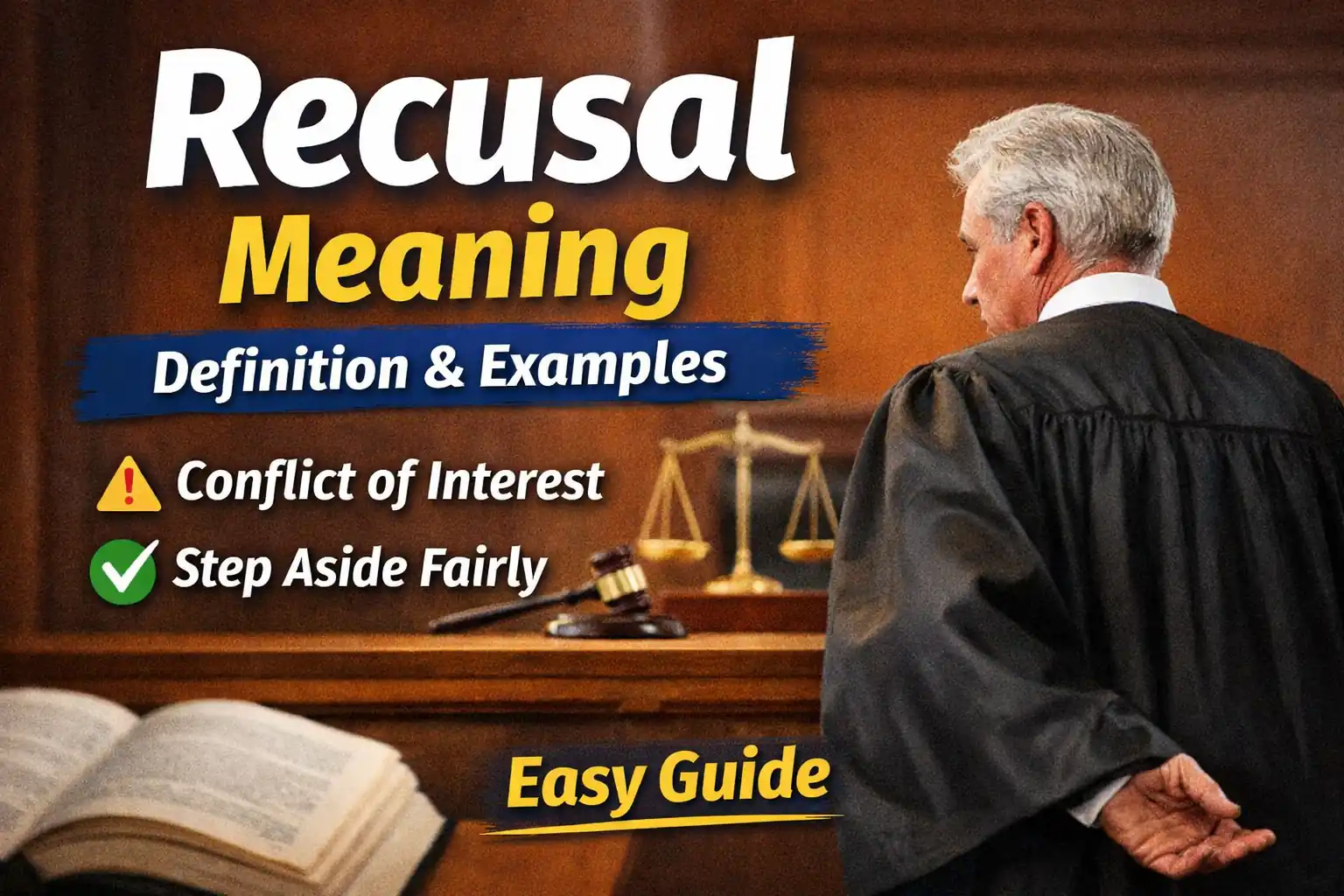
The term recusal meaning is often used in legal, professional, and official situations where fairness is important. If you have ever seen a judge stepping away from a case or an official refusing to make a decision, that situation is called recusal.
In simple words, recusal means removing yourself from a decision or situation because of a possible conflict of interest or bias.
🔍 What is Recusal Meaning?
The recusal meaning refers to the act of withdrawing from a duty or decision-making process due to personal interest, bias, or conflict.
For example:
- A judge leaves a case because one party is a relative
- A company manager avoids hiring decisions involving close friends
- A government official steps back due to personal involvement
In all these situations, recusal helps maintain fairness and transparency.
⚖️ Recusal Meaning in Law
In legal systems, recusal is very important. Judges and lawyers must remain neutral. If there is even a small chance of bias, they choose recusal.
For instance:
- A judge may recuse themselves if they know one of the parties
- If a judge has a financial interest in the case outcome
- If previous involvement creates doubt about fairness
This ensures that justice is served without any doubt or influence.
🧠 Why Recusal is Important
Understanding recusal meaning is important because it protects integrity and trust in any system.
Here’s why it matters:
- ✅ Maintains fairness in decisions
- ✅ Prevents conflicts of interest
- ✅ Builds public trust
- ✅ Avoids legal or ethical issues
Without recusal, decisions could be biased, which may lead to unfair outcomes.
📌 Real-Life Examples of Recusal Meaning
Let’s understand the recusal meaning with simple real-life examples:
- In Court:
A judge refuses to hear a case because the accused is a family friend. - In Office:
A manager steps away from selecting a candidate because they personally know one applicant. - In Politics:
A minister avoids voting on a policy that directly benefits their own business.
These examples clearly show how recusal prevents unfair advantage.
🆚 Recusal vs Withdrawal
Many people confuse recusal with withdrawal, but they are slightly different:
| Aspect | Recusal | Withdrawal |
|---|---|---|
| Reason | Conflict of interest or bias | Personal choice or general reason |
| Usage | Legal, official decisions | General situations |
| Purpose | Maintain fairness | Step back voluntarily |
🗣️ Simple Sentence Examples
- The judge announced his recusal from the case.
- She chose recusal to avoid any conflict of interest.
- His recusal ensured a fair decision-making process.
📚 Conclusion
The recusal meaning is all about stepping aside when your involvement could create bias or conflict. Whether in law, business, or daily life, recusal plays a key role in ensuring fairness and honesty.
In today’s world, where trust and transparency are essential, understanding recusal meaning helps us make better and more ethical decisions.
❓ FAQs
1. What is the simple meaning of recusal?
Recusal means removing yourself from a decision due to conflict of interest or bias.
2. Where is recusal commonly used?
Recusal is commonly used in courts, government decisions, and corporate environments.
3. Why do judges recuse themselves?
Judges recuse themselves to avoid bias and ensure fair judgment.
4. Is recusal mandatory?
In some situations, yes—especially in legal or ethical conflicts.
5. Can anyone use recusal in daily life?
Yes, anyone can step aside from decisions where they feel biased.