What Does IMO Mean?
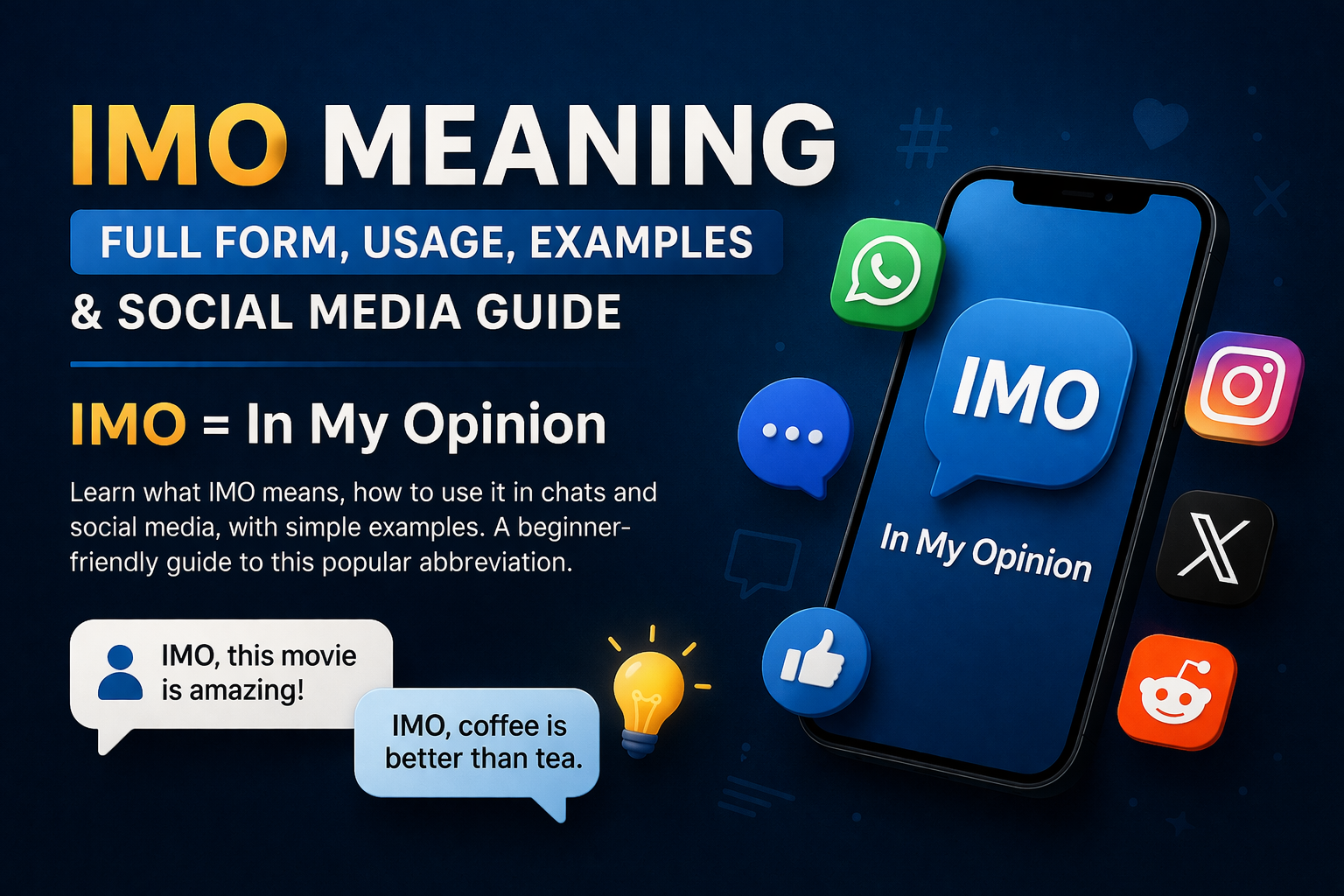
The abbreviation IMO stands for “In My Opinion.” It is commonly used in online conversations, social media platforms, text messages, and forums to express a personal viewpoint or perspective. When someone uses IMO, they are making it clear that what they are saying is based on their own thoughts rather than a universal fact.
Why Do People Use IMO?
In today’s digital communication, short forms and abbreviations help people save time and type faster. IMO is one such widely used acronym that helps keep conversations quick and casual. It also softens statements by making them sound less forceful or judgmental.
For example, instead of saying:
“This movie is boring,”
a person might say:
“IMO, this movie is boring.”
This makes the statement feel more like a personal opinion rather than a strong criticism.
IMO Full Form
- IMO = In My Opinion
There is also a slightly stronger version:
- IMHO = In My Humble Opinion
Both are used to express personal views, but IMHO can sometimes sound more polite or sarcastic depending on the context.
How to Use IMO in Sentences
Here are some simple examples to help you understand how to use IMO:
- IMO, this restaurant has the best food in town.
- That phone is overpriced, IMO.
- IMO, studying regularly is better than last-minute preparation.
- This song is underrated, IMO.
You can place IMO at the beginning, middle, or end of a sentence depending on your style.
IMO in Social Media and Chat
IMO is very popular on platforms like WhatsApp, Instagram, Twitter (X), and Reddit. It is often used in discussions, debates, or comment sections where people share their views.
Example:
Person A: Which is better, online classes or offline classes?
Person B: IMO, offline classes are more effective.
Using IMO helps avoid arguments because it clearly shows that the statement is just an opinion.
When Should You Use IMO?
You should use IMO when:
- You are sharing a personal thought or preference
- You want to sound polite and less aggressive
- You are participating in discussions or debates
- You want to avoid sounding like you are stating a fact
When Not to Use IMO
Avoid using IMO in:
- Formal writing like academic papers or professional emails
- Situations where facts and data are required
- Official communication
Instead, use complete sentences like:
“I believe that…” or “In my opinion…”
IMO vs Facts
It is important to understand the difference between opinions and facts.
- Opinion (IMO): “IMO, summer is the best season.”
- Fact: “Summer is the hottest season of the year.”
Opinions are personal and can vary from person to person, while facts are universally accepted truths.
Conclusion
IMO is a simple yet powerful abbreviation that helps express personal opinions clearly and politely in digital communication. Whether you are chatting with friends, commenting on social media, or participating in discussions, using IMO can make your statements sound more respectful and less argumentative.
Understanding how and when to use IMO will improve your communication skills and help you engage better in online conversations.