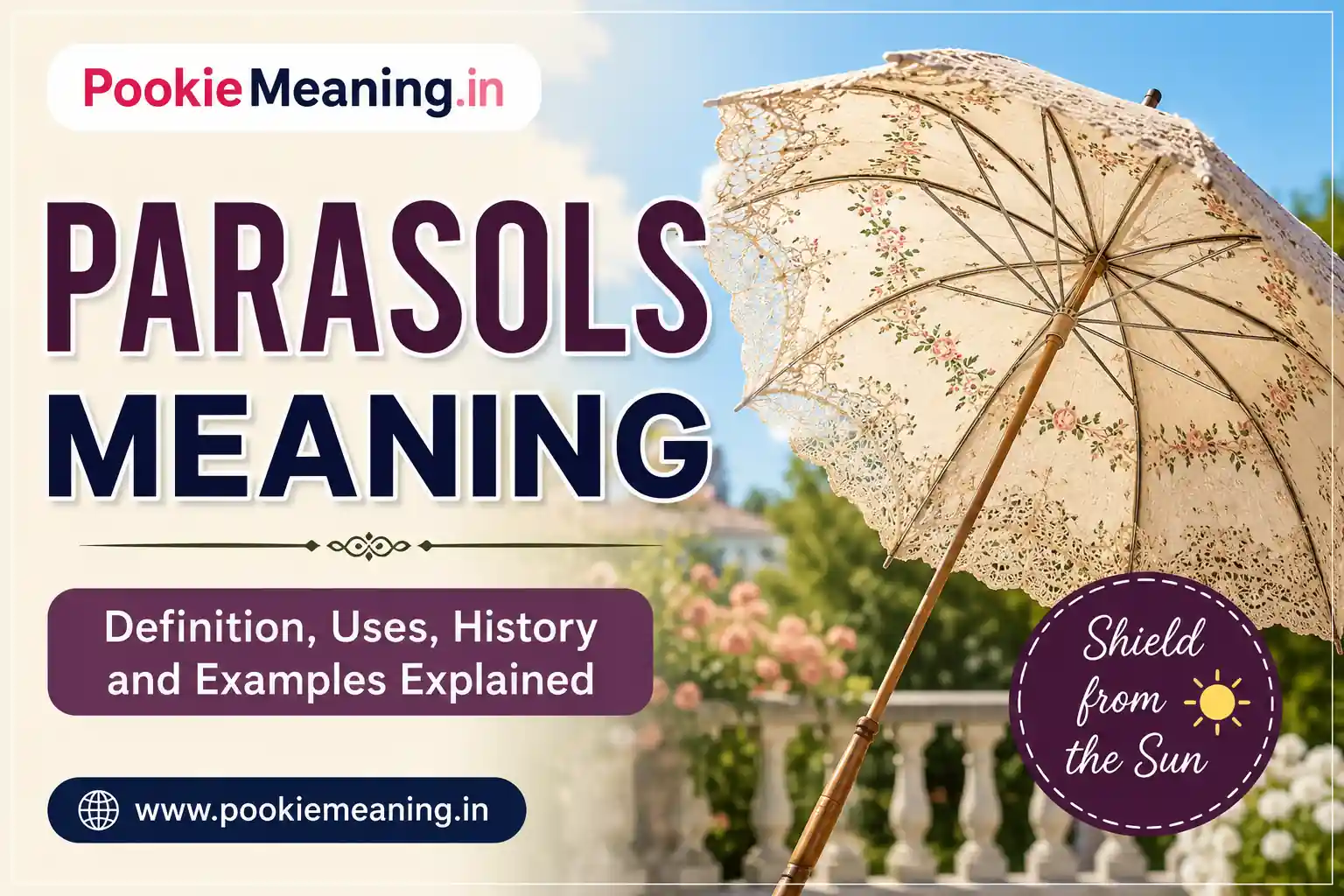
The parasols meaning is quite simple. A parasol is a lightweight device designed to provide shade from the sun. It looks similar to an umbrella but is mainly used for protection against sunlight rather than rain. The word comes from the combination of two words: para (to shield) and sol (sun).
Today, parasols are commonly seen in gardens, beaches, outdoor cafés, weddings, and fashion events. They are often decorative and can add elegance to an outdoor setting while keeping people comfortable under the sun.
Read also: Parka Meaning
Parasols Meaning in Simple Words
In simple English, a parasol is a sunshade that people carry or place outdoors to block direct sunlight.
Definition:
A parasol is a lightweight umbrella-like object used to protect a person from the sun.
Unlike rain umbrellas, parasols are usually made from decorative fabrics and lighter materials. Many people use them during hot summer days to avoid excessive exposure to sunlight.
History of Parasols
Parasols have been used for thousands of years. Historical records show that ancient civilizations such as Egypt, China, Greece, and Rome used parasols as symbols of status and wealth.
In earlier times, only royalty and wealthy individuals carried parasols. They were often decorated with beautiful fabrics, embroidery, and precious materials.
During the Victorian era, parasols became a popular fashion accessory among women. They were used not only for shade but also as part of elegant clothing styles.
Common Uses of Parasols
Parasols are still widely used today for various purposes.
1. Sun Protection
The primary purpose of a parasol is to shield people from direct sunlight.
2. Fashion Accessory
Many people use decorative parasols at weddings, cultural festivals, and photo shoots.
3. Garden Decoration
Large parasols are commonly placed in gardens and patios to create comfortable shaded areas.
4. Beach Shade
Beach parasols provide protection from harsh sunlight while relaxing near the sea.
Read also: Macrame Meaning
Parasol vs Umbrella
Many people confuse parasols with umbrellas. Although they look similar, they serve different purposes.
| Feature | Parasol | Umbrella |
|---|---|---|
| Purpose | Protection from sun | Protection from rain |
| Material | Lightweight fabric | Waterproof fabric |
| Design | Decorative and stylish | Practical and durable |
| Usage | Sunny weather | Rainy weather |
A parasol may not provide effective protection during heavy rain because it is designed mainly for sun protection.
Examples of Parasols in Sentences
Understanding the parasols meaning becomes easier with examples.
- She carried a beautiful white parasol during the summer festival.
- The café placed colorful parasols over outdoor tables.
- Tourists relaxed under large beach parasols.
- The bride used a lace parasol for wedding photographs.
- The garden looked elegant with decorative parasols around the seating area.
Types of Parasols
There are several different kinds of parasols available today.
Traditional Handheld Parasols
These are small parasols carried by hand and often used for fashion purposes.
Garden Parasols
Large parasols designed for patios, balconies, and outdoor dining areas.
Beach Parasols
Specially designed to provide shade at beaches and coastal locations.
Decorative Parasols
Used mainly for events, photography, and cultural celebrations.
Read also: Chignon Meaning
Why Are Parasols Popular Again?
In recent years, parasols have become fashionable once more because:
- They provide natural sun protection.
- They add elegance to outdoor events.
- They are popular in photography and social media content.
- Many people appreciate vintage and classic fashion trends.
Modern parasols are available in numerous colors, patterns, and materials, making them both practical and attractive.
Parasols Meaning in Different Contexts
The word “parasol” can be used in various contexts:
Fashion
A stylish accessory carried during outdoor events.
Gardening
A large shade structure used over outdoor furniture.
Tourism
Protective shade equipment used at beaches and tourist destinations.
Architecture and Design
Large parasol-style canopies used in public spaces and outdoor seating areas.
Interesting Facts About Parasols
- Parasols existed long before modern umbrellas.
- Ancient Egyptian artwork often depicts royal figures with parasols.
- The word literally means “shield from the sun.”
- Traditional Japanese parasols are known for their artistic designs.
- Some luxury parasols are handmade and highly collectible.
Read also: Gossamer Meaning
Conclusion
The parasols meaning refers to a device specifically designed to provide protection from the sun. While it resembles an umbrella, its main purpose is shading rather than keeping rain away. From ancient royal courts to modern gardens and beaches, parasols have remained both functional and fashionable.
Whether used for comfort, decoration, or style, parasols continue to be a timeless accessory that combines beauty with practicality.
FAQs
What is the meaning of parasols?
Parasols are umbrella-like devices designed to provide shade and protection from sunlight.
Are parasols and umbrellas the same?
No. Parasols protect from the sun, while umbrellas are primarily designed for rain.
Where are parasols commonly used?
They are commonly used in gardens, beaches, patios, weddings, and outdoor events.
What is the origin of the word parasol?
The word comes from the combination of “para” (shield) and “sol” (sun).
Can a parasol be used in rain?
Light rain may be manageable, but parasols are generally not designed for heavy rainfall.