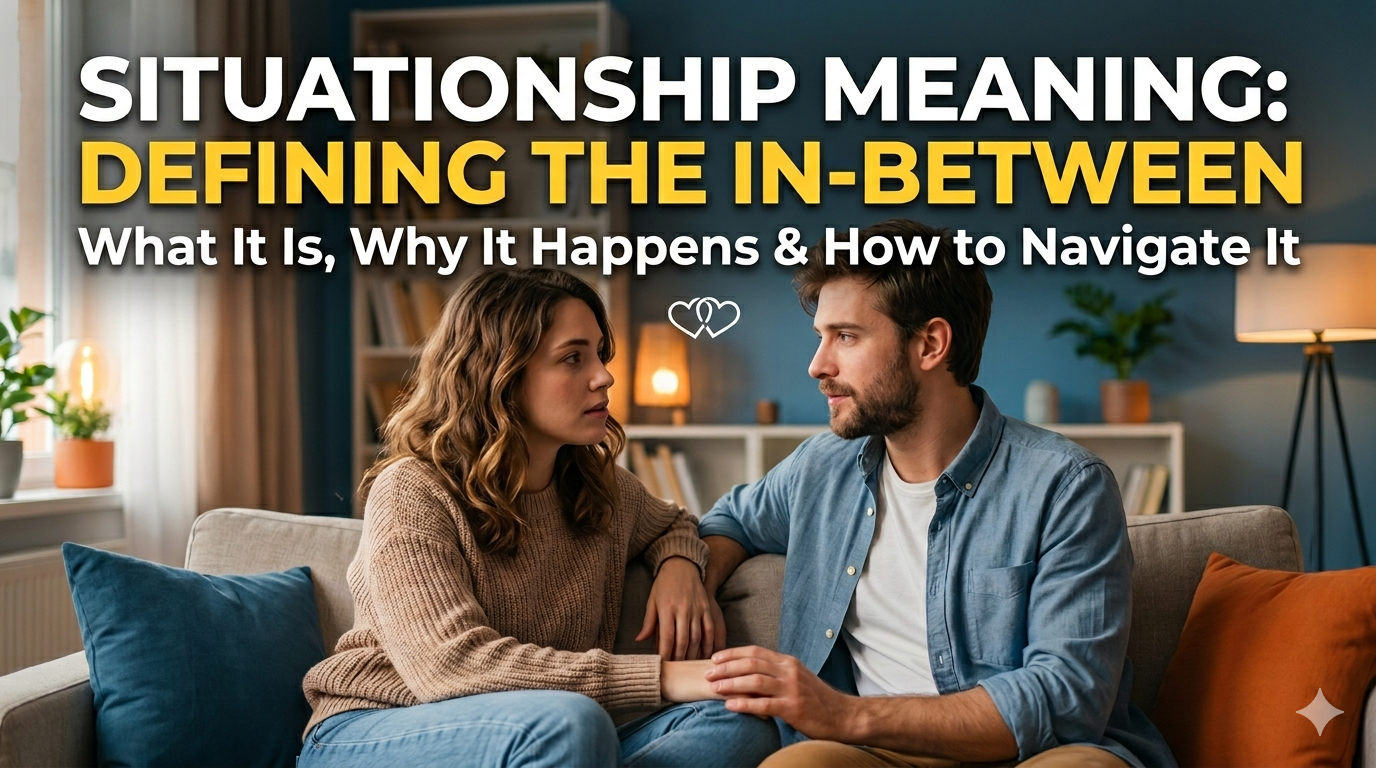
Modern dating has created a new kind of relationship space —
not single, not committed, not exactly friends, not exactly partners.
This space is called a situationship.
People often say:
• “We’re not dating, but we’re not just friends.”
• “There’s something, but no label.”
• “It feels like a relationship, but there are no promises.”
That confusing middle ground is exactly where a situationship lives.
In this guide, you’ll clearly understand:
✔ The real situationship meaning
✔ How it’s different from a relationship
✔ Real-life examples
✔ Emotional signs
✔ Risks most people ignore
✔ And what to do if you’re in one
📌 What Does “Situationship” Mean?
A situationship is an emotional or romantic connection without clear commitment, definition, or direction.
It usually includes:
• Regular talking or meeting
• Emotional closeness
• Physical intimacy (sometimes)
• Relationship-like behavior
But without:
• Clear labels
• Long-term intentions
• Exclusivity agreements
• Accountability
In simple words:
👉 A situationship feels like a relationship…
👉 But functions like uncertainty.
🧠 Why Situationships Are So Common Today
Situationships didn’t become popular by accident.
They grew because of:
• Dating apps and endless options
• Fear of commitment
• Focus on career and independence
• Past relationship trauma
• Validation without responsibility
• Emotional convenience
Modern dating allows people to receive emotional benefits without relationship responsibility.
That environment naturally creates situationships.
🚩 Real Examples of Situationships
Example 1
You talk every day.
Share personal problems.
Go out like a couple.
But when someone asks, they say:
“We’re just seeing where things go.”
Example 2
You act exclusive.
Get jealous.
Support each other emotionally.
But there is no discussion about the future.
Example 3
They give relationship energy when it suits them,
and disappear when commitment is mentioned.
All of these are classic situationships.
🔍 Signs You Are in a Situationship
You are very likely in a situationship if:
• There is no clear label after a long time
• Future talk makes them uncomfortable
• You don’t know where you stand
• Effort comes and goes
• You feel emotionally attached but insecure
• You hesitate to ask “what are we?”
• Your needs are unclear or unmet
• You feel anxious more than safe
A real relationship brings clarity.
A situationship usually brings confusion.
⚠️ The Hidden Emotional Risks of Situationships
Situationships don’t always start unhealthy.
But over time, they often create:
• Emotional dependency
• Fear of abandonment
• Low self-worth
• Overthinking
• One-sided attachment
• Delayed healing
• Difficulty trusting future partners
The biggest danger is this:
👉 One person usually grows attached.
👉 The other enjoys freedom.
That emotional imbalance causes most situationship pain.
🧠 Why Situationships Are Hard to Leave
People don’t stay because situationships are fulfilling.
They stay because:
• There is emotional bonding
• Hope keeps them waiting
• They fear losing the person completely
• They believe clarity will come later
• They confuse consistency with commitment
• They are emotionally invested
Situationships often give just enough connection to stay,
but not enough security to feel safe.
⚖️ Situationship vs Relationship
A relationship has:
• Clarity
• Communication
• Mutual expectations
• Accountability
• Direction
• Emotional safety
A situationship has:
• Uncertainty
• Mixed signals
• Undefined roles
• Emotional guessing
• Inconsistent effort
• Attachment without security
The difference is not feelings.
The difference is structure.
✅ What To Do If You’re in a Situationship
1. Get honest with yourself
Are you okay with uncertainty, or are you hoping it changes?
2. Ask the direct question
“What are we doing?”
“Where is this going?”
Clarity may be uncomfortable,
but confusion is more damaging.
3. Watch actions, not words
Consistency and effort matter more than promises.
4. Set boundaries
Decide what you will and will not emotionally accept.
5. Be willing to walk away
If your needs don’t match their intentions,
staying will not convert it into a relationship.
❤️ Final Honest Thought
Understanding the situationship meaning is important because situationships are not neutral.
They either:
• Grow into healthy relationships
• Or slowly drain emotional energy
If something feels like a relationship but avoids responsibility like single life —
that imbalance will eventually hurt someone.
Clarity may end a connection.
But confusion slowly damages you.
🙋♂️ FAQs
A situationship is an undefined romantic or emotional connection without clear commitment or relationship structure.
No. Dating can move toward commitment. A situationship stays emotionally involved but undefined.
Not always, but long-term situationships often create emotional imbalance and insecurity.
Sometimes, but only when both people openly communicate and want the same future.
Because they mix emotional attachment with uncertainty, which creates anxiety and unmet expectations.