You send a long message.
You ask a question.
You try to keep the conversation alive.
And the reply comes back as:
“Hmm.”
“Okay.”
“Yes.”
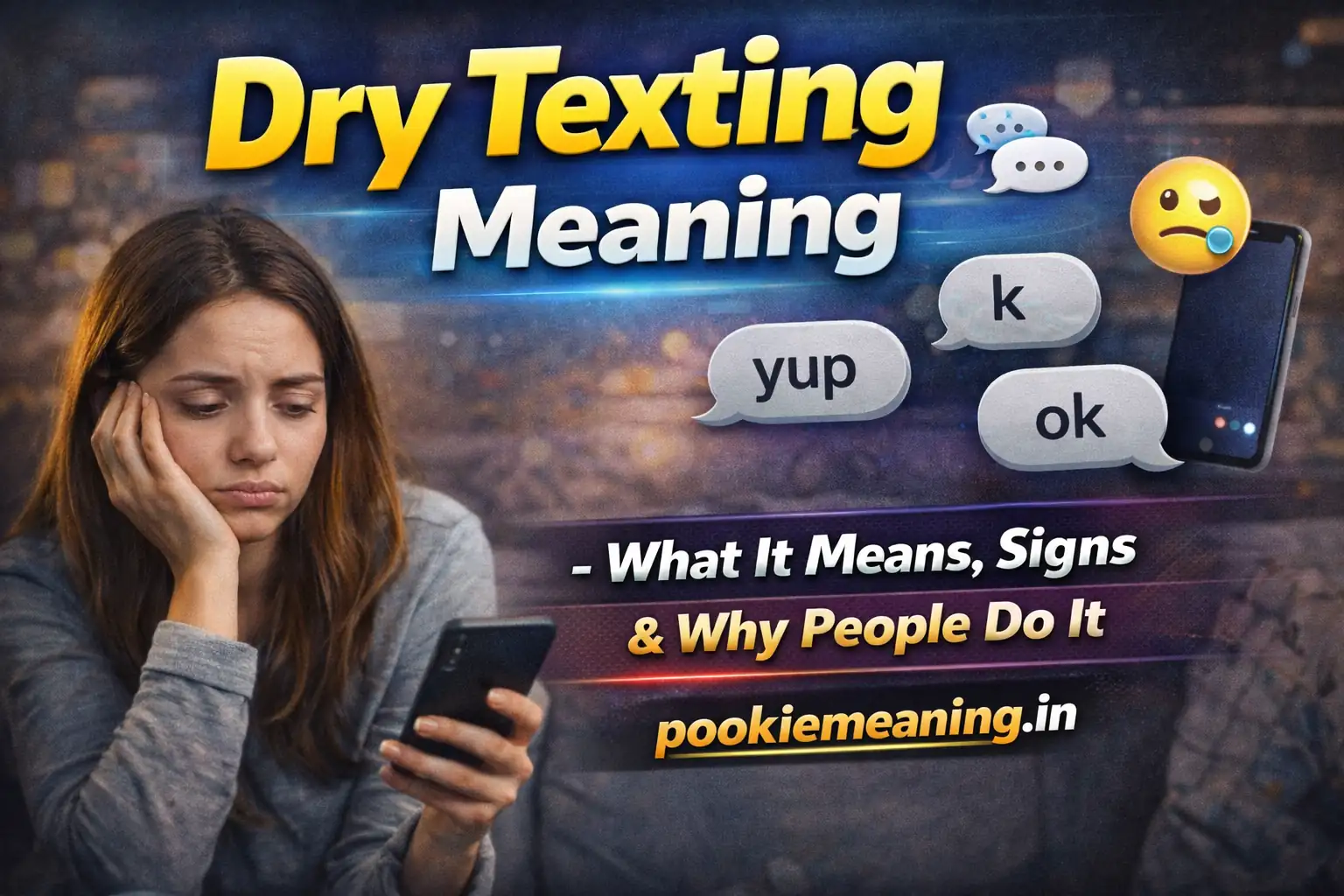
That experience is called dry texting.
Understanding the dry texting meaning is important because texting is a major part of modern communication—and dry texts often signal more than just bad conversation skills.
What Is Dry Texting?
Dry texting means replying to messages in a short, emotionless, or uninterested way that doesn’t move the conversation forward.
A dry texter usually:
- Gives one-word replies
- Doesn’t ask follow-up questions
- Shows no enthusiasm
- Ends conversations quickly
Dry texting feels like talking to someone who is technically present, but mentally checked out.
Dry Texting Meaning in Simple Words
In simple terms:
Dry texting is when someone replies, but doesn’t engage.
They respond, but they don’t connect.
Common Examples of Dry Texting
Here are some real-life examples people recognize instantly:
- You: “How was your day?”
Them: “Fine.” - You: “That movie was amazing!”
Them: “Yeah.” - You: “What are you doing later?”
Them: “Nothing.”
The conversation feels flat, forced, and one-sided.
Why Do People Dry Text?
Dry texting isn’t always about disinterest. There are several reasons:
1. Lack of Interest
Sometimes, the simplest reason is the real one—they’re not emotionally invested.
2. Emotional Unavailability
People who struggle with emotional expression often communicate poorly over text.
Read also: Emotional Unavailability Meaning
👉 https://pookiemeaning.in/meaning/trauma-bonding-meaning-in-relationships/
(This topic closely connects with emotional distance patterns.)
3. Social or Texting Anxiety
Some people don’t know how to express tone or emotion through messages.
4. Low Priority
When someone is busy or distracted, texting becomes minimal and dry.
Dry Texting in Dating
In dating, dry texting is usually a warning sign.
It often shows:
- Fading interest
- Mixed signals
- Emotional detachment
- Unclear intentions
This is why dry texting is common in undefined connections.
Read also: Situationship Meaning in Modern Dating
👉 https://pookiemeaning.in/meaning/situationship-meaning-modern-dating/
Dry Texting vs Ghosting
These two are often confused.
- Dry texting: Replies continue, but with no effort
- Ghosting: Replies stop completely
Dry texting can sometimes be a slow fade before ghosting.
Read also: Ghosting Meaning in Relationships
👉 https://pookiemeaning.in/meaning/ghosting-meaning-in-relationships/
Is Dry Texting a Red Flag?
It depends on frequency and context.
Dry texting is a red flag when:
- It’s consistent
- You’re the only one making effort
- It leaves you feeling ignored or confused
Dry texting is not a red flag when:
- Someone is temporarily busy
- Communication style differs
- It happens occasionally
Patterns matter more than excuses.
How Dry Texting Makes the Other Person Feel
Being on the receiving end of dry texting often leads to:
- Self-doubt
- Overthinking
- Feeling unwanted
- Emotional frustration
Healthy communication should feel mutual, not draining.
Should You Confront Dry Texting?
Yes—if you care about clarity.
A simple, honest message is better than silent assumptions. If effort doesn’t change after communication, the message is already clear.
Read also: Breadcrumbing Meaning in Dating
👉 https://pookiemeaning.in/meaning/breadcrumbing-meaning-in-dating/
How to Respond to Dry Texting
You have three healthy options:
- Match their energy
- Address it directly
- Step back and protect your emotional space
Chasing dry energy rarely turns into warmth.
Final Thoughts: Dry Texting Meaning
The true dry texting meaning is not just about short replies—it’s about low emotional investment.
Texting should feel:
- Balanced
- Responsive
- Comfortable
If it feels like pulling words out of someone, that’s information worth listening to.
FAQs
Dry texting means replying with minimal effort or emotion.
Often yes, but context and consistency matter.
Not always. Sometimes it reflects mood, stress, or communication style.
Yes, if it becomes a long-term pattern.
Communicate once, observe behavior, and choose self-respect.