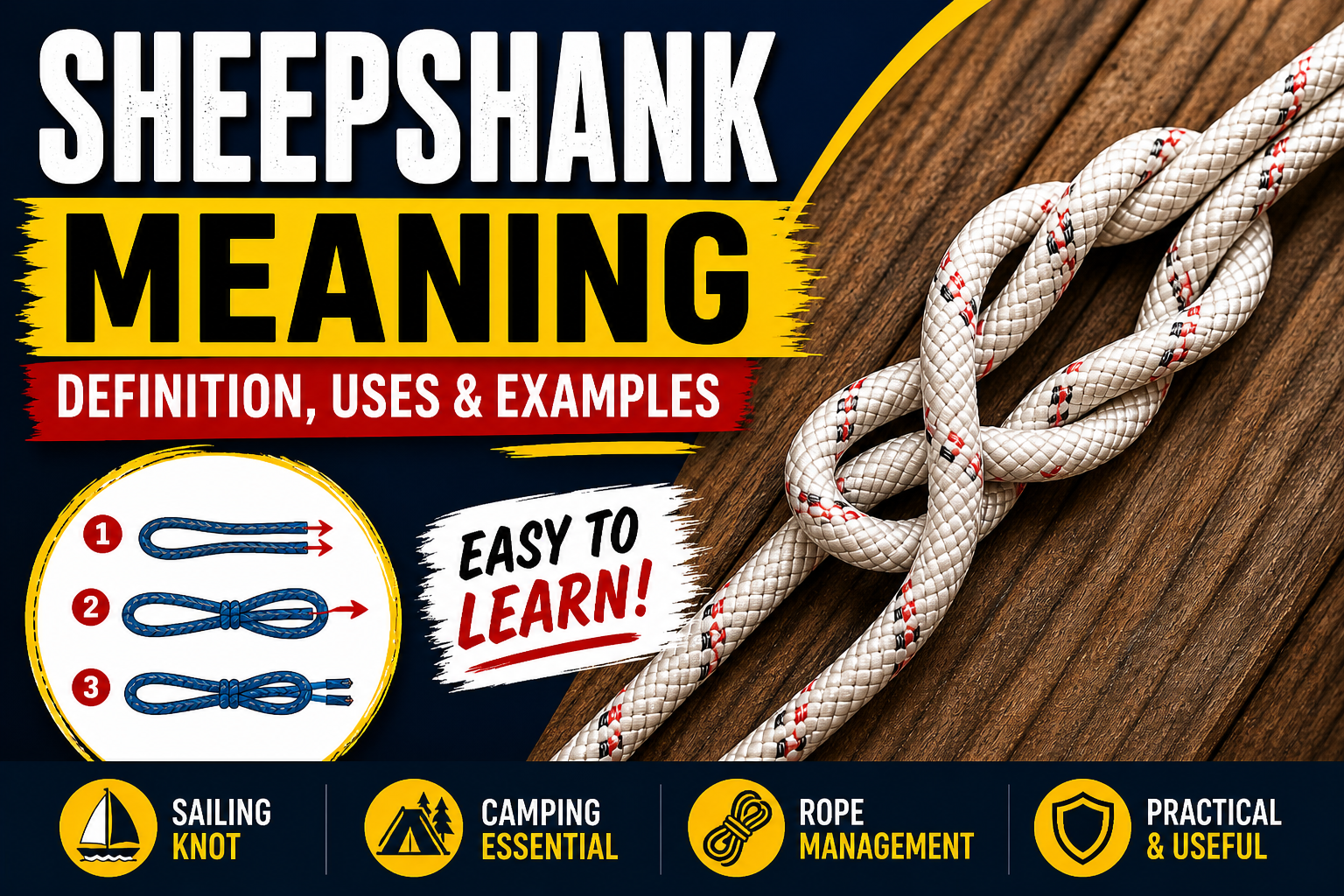
The sheepshank meaning refers to a specific type of knot used to shorten a rope or to take up slack without cutting it. This knot has been used for centuries, especially in sailing, camping, and general rope work. Even though it may sound like a strange word, the sheepshank is actually a very practical and useful knot.
In simple terms, the sheepshank meaning is all about managing rope length efficiently while maintaining strength and stability.
What is a Sheepshank Knot?
A sheepshank knot is a traditional knot that allows you to shorten a rope temporarily. Instead of cutting or damaging the rope, you simply tie this knot to reduce its effective length.
This knot is commonly used in:
- Sailing and boating
- Camping and outdoor activities
- Rescue operations
- Rope management tasks
It is especially helpful when a rope becomes too long or when a damaged section of rope needs to be avoided.
How Does the Sheepshank Work?
The sheepshank meaning becomes clearer when you understand how the knot works. It creates loops in the rope that hold tension when pulled from both ends.
Here’s the basic idea:
- A section of rope is folded back and forth
- Two loops are created on each side
- The ends of the rope secure the loops
When tension is applied, the knot stays in place. However, it is important to note that this knot can slip if there is no tension.
Practical Uses of Sheepshank
The sheepshank meaning is not just theoretical—it has real-world applications.
1. Shortening a Rope
If your rope is too long, you can use a sheepshank instead of cutting it.
2. Avoiding Damaged Sections
If part of a rope is weak or damaged, the sheepshank can isolate that section safely.
3. Temporary Adjustments
It is ideal for temporary situations where you need flexibility.
4. Outdoor Activities
Campers and hikers often use this knot for quick rope adjustments.
Advantages of Sheepshank Knot
Understanding the sheepshank meaning also includes knowing its benefits:
- No need to cut the rope
- Easy to tie and untie
- Useful for temporary fixes
- Helps preserve rope length
Limitations of Sheepshank
While useful, the sheepshank knot also has some drawbacks:
- Can slip without constant tension
- Not suitable for heavy loads
- Requires careful tying
Because of these limitations, it is not commonly used in critical safety situations.
Example Sentences Using Sheepshank
Here are some simple examples to understand the sheepshank meaning in context:
- The sailor tied a sheepshank to shorten the rope.
- We used a sheepshank knot to avoid the damaged part of the rope.
- The camper quickly fixed the rope using a sheepshank.
Why is it Called Sheepshank?
The exact origin of the word “sheepshank” is unclear, but it is believed to come from old nautical terms. “Shank” refers to a part of something, and the knot may resemble the shape of a sheep’s leg.
Conclusion
The sheepshank meaning is simple yet highly practical. It is a knot used to shorten ropes or bypass damaged sections without cutting. While it may not be the strongest knot, it is extremely useful for temporary adjustments and everyday rope work.
Whether you are a sailor, camper, or just someone curious about knots, understanding the sheepshank can be surprisingly helpful.
FAQs
1. What is the sheepshank meaning in simple words?
It is a knot used to shorten a rope without cutting it.
2. Is the sheepshank knot strong?
It is moderately strong but can slip if there is no tension.
3. Where is the sheepshank knot used?
It is used in sailing, camping, and rope management tasks.
4. Can beginners tie a sheepshank?
Yes, it is relatively easy to learn with practice.
5. Is the sheepshank knot safe for heavy loads?
No, it is not recommended for critical or heavy load situations.