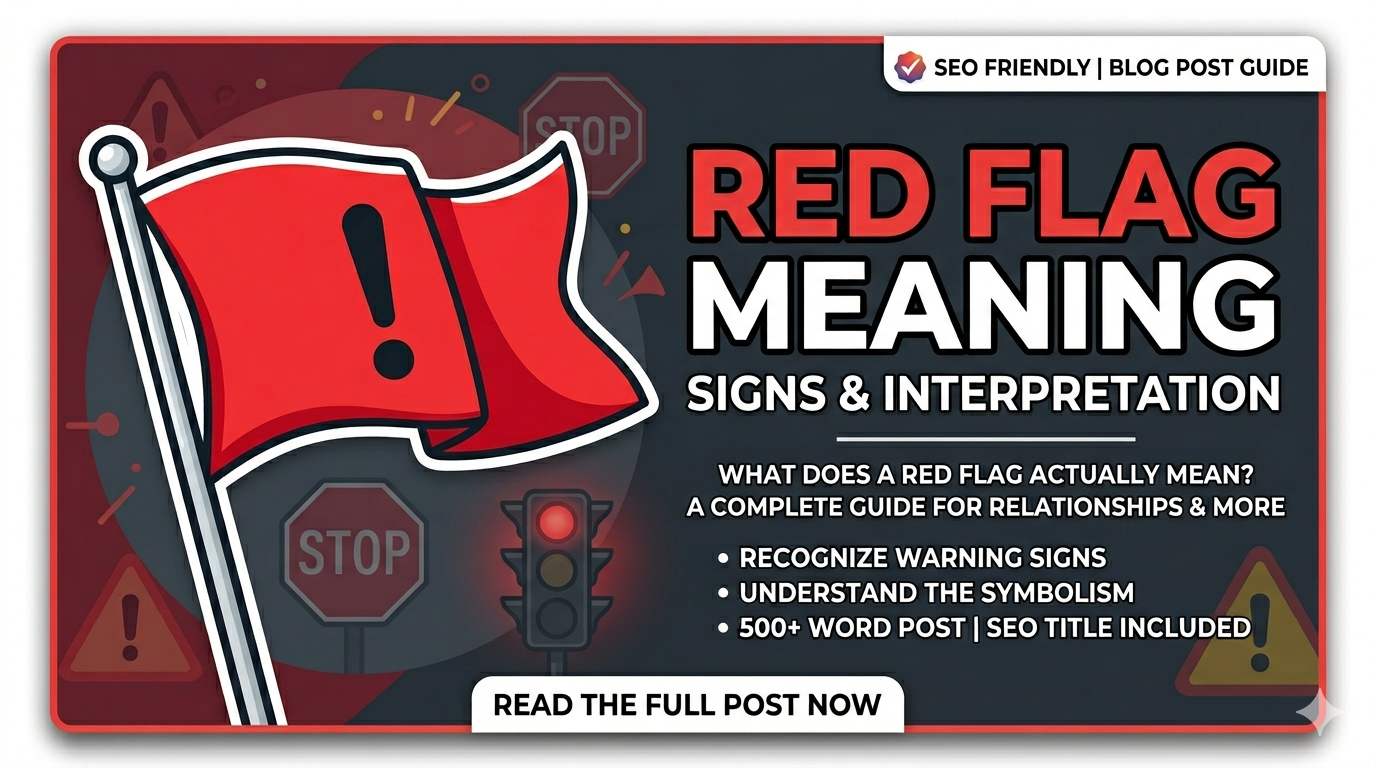
The term “red flag” is widely used in modern conversations, especially on social media, in relationships, and in everyday decision-making. But what does it actually mean?
A red flag refers to a warning sign or indicator that something may be wrong, unhealthy, or potentially dangerous. It is often used to describe behaviors, actions, or situations that signal a problem that should not be ignored.
Origin of the Term “Red Flag”
The phrase comes from the literal use of red flags as signals of danger or caution. Historically, red flags were used in battlefields to indicate danger, and in swimming areas to warn people about unsafe conditions. Over time, the meaning evolved into a metaphor for warning signs in life.
Red Flag Meaning in Different Contexts
1. In Relationships
In relationships, a red flag is a behavior or trait that suggests potential issues in a person’s character or intentions.
Examples:
- Lack of respect or constant criticism
- Controlling behavior
- Dishonesty or hiding things
- Poor communication
- Disrespecting boundaries
These signs often indicate that the relationship may become unhealthy or toxic over time.
2. In Friendships
Red flags in friendships can include:
- One-sided effort
- Jealousy or negativity
- Lack of support
- Gossiping or betrayal
These behaviors suggest that the friendship may not be genuine or balanced.
3. In Workplace or Professional Life
In a work environment, red flags can help you identify potential problems early.
Examples:
- Unclear job roles
- Poor management
- Lack of growth opportunities
- Toxic work culture
Recognizing these signs can help you avoid stressful or harmful situations.
4. In Daily Life Decisions
Red flags are not limited to people—they can also appear in situations.
Examples:
- Deals that seem “too good to be true”
- Lack of transparency
- Pressure to make quick decisions
These warning signs help you think carefully before taking action.
Why Red Flags Are Important
Understanding red flags is essential because they:
- Help you protect your mental and emotional well-being
- Allow you to make smarter decisions
- Prevent you from getting into harmful situations
- Encourage self-awareness and boundaries
Ignoring red flags often leads to bigger problems later.
Green Flags vs Red Flags
While red flags indicate danger, green flags represent positive and healthy signs.
Green flags include:
- Respect and honesty
- Good communication
- Support and understanding
- Consistency in behavior
A balanced view of both helps in making better judgments.
How to Identify Red Flags
Here are some simple tips:
- Trust your instincts
- Pay attention to repeated patterns
- Don’t ignore uncomfortable feelings
- Take time before making decisions
- Seek advice from trusted people
Conclusion
In simple terms, a red flag is a warning sign that should not be ignored. Whether in relationships, friendships, work, or everyday situations, recognizing these signs early can save you from stress, disappointment, and harm.
Being aware of red flags doesn’t mean being overly suspicious—it means being smart, aware, and protective of your well-being. Always listen to your intuition and take action when something doesn’t feel right.