In relationships, the phrase “red flag” is used a lot.
People say things like:
“His behavior is a red flag.”
“That’s a huge red flag.”
“I ignored the red flags… and now I regret it.”
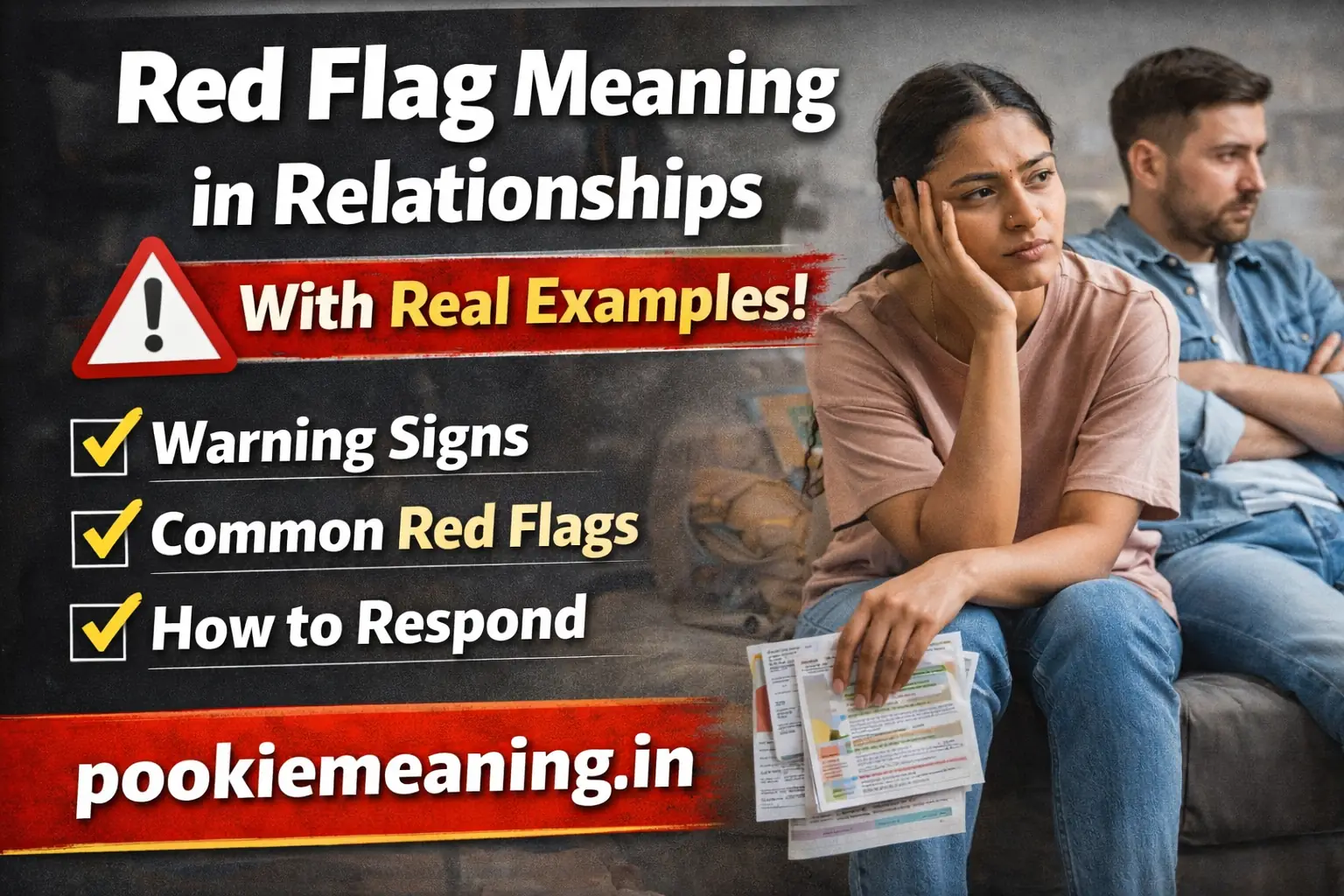
But what does red flag meaning in relationships actually involve?
A red flag is not a small mistake.
It’s not about someone being imperfect.
A red flag is a warning sign — something that signals a deeper problem that can harm your emotional health, safety, or future.
This post explains:
• What a red flag really means
• The most common relationship red flags
• Real-life examples
• And what to do when you notice them

📌 What Does “Red Flag” Mean in a Relationship?
A red flag is a behavior, pattern, or attitude that suggests:
• Emotional manipulation
• Lack of respect
• Control issues
• Dishonesty
• Or potential abuse
It’s called a red flag because, just like on a road, it signals danger ahead.
Red flags are not about one bad day.
They are about repeated behavior and consistent patterns.
🚩 Common Red Flags in Relationships
Here are some of the most real and widely reported relationship red flags.
1. Constant Lying (Even About Small Things)
When someone lies regularly — even about tiny things — it damages trust.
Real example:
She said she was at work. Later, you find out she was somewhere else.
When asked, she changes the story.
This is a red flag because small lies usually grow into big ones.
2. Controlling Behavior
Control often starts quietly.
• Telling you what to wear
• Getting angry when you meet friends
• Checking your phone
• Making you feel guilty for having a life outside them
Real example:
“He gets upset every time I go out without him. Now I’ve stopped meeting my friends.”
This is a major red flag.
Love supports freedom. Control slowly removes it.
3. Disrespect and Humiliation
Jokes that hurt.
Insults disguised as “honesty.”
Mocking your emotions.
Real example:
“She makes fun of my insecurities in front of others and says I’m too sensitive.”
This is not humor.
This is emotional harm.
4. Extreme Jealousy and Possessiveness
Jealousy is often romanticized.
But extreme jealousy is not love — it’s fear and control.
Real example:
“He accuses me of cheating when I talk to anyone. Even cousins.”
This red flag often appears before emotional or physical abuse.
5. No Accountability
A person who is never wrong is dangerous in relationships.
They say:
• “You made me do this.”
• “It’s your fault I get angry.”
• “You’re overreacting.”
Real example:
“She insults me, then says I forced her to say it.”
Lack of accountability means problems will never truly change.
6. Love Bombing (Too Much, Too Fast)
Excessive affection very early can feel amazing.
But when it’s extreme and rushed, it can be manipulation.
• “You’re my whole world” in week one
• Pressure to commit quickly
• Emotional dependency
Real example:
“He wanted marriage within two weeks and became angry when I asked to slow down.”
This red flag often appears in controlling or narcissistic relationships.

7. You Feel Drained, Not Safe
One of the strongest red flags is how you feel.
• Constant anxiety
• Walking on eggshells
• Fear of their reactions
• Losing self-confidence
Real example:
“I don’t recognize myself anymore. I’m always scared of upsetting them.”
Your nervous system often notices danger before your mind does.
🧠 Why People Ignore Red Flags
Most people don’t ignore red flags because they’re foolish.
They ignore them because:
• They’re emotionally attached
• They see potential instead of reality
• They don’t want to start over
• They hope love will change things
• They normalize bad behavior
Red flags rarely appear as monsters.
They often appear as charm, intensity, or emotional stories.
⚠️ Red Flag vs Normal Relationship Problems
Not every issue is a red flag.
Normal problems include:
• Misunderstandings
• Occasional arguments
• Different communication styles
• Bad moods
• Personal insecurities
Red flags involve:
• Repeated harm
• Power imbalance
• Loss of respect
• Emotional fear
• Patterned behavior
The difference is frequency, intensity, and impact.
✅ What To Do When You Notice Red Flags
- Don’t explain them away
- Observe patterns, not promises
- Talk about the behavior clearly
- Set boundaries
- Watch actions, not words
- Be willing to walk away
A relationship should make life safer, not smaller.
❤️ Final Honest Thought
Understanding the red flag meaning in relationships is not about becoming paranoid.
It’s about protecting your emotional and mental health.
Healthy relationships feel:
• Safe
• Respectful
• Supportive
• Stable
• And free
If love constantly hurts, confuses, or shrinks you —
that pain itself is a red flag.
🙋♂️ FAQs
A red flag is a warning sign of unhealthy, toxic, or harmful behavior that can damage trust, safety, or emotional well-being.
Not always. Some can be addressed. But serious or repeated red flags should never be ignored.
Disrespect, control, and lack of accountability are among the most dangerous red flags.
Yes. Many red flags appear very early but are often hidden behind charm or emotional intensity.